
Create multi-generational wealth with principled natural capital stewardship.
Integrative Organizing is a research project dedicated to demonstrating that peaceful civilization can be systematically designed — not through ideology, but through disciplined, principled choices that harmonize economic systems with the living systems they depend on.
The Purpose
Most discussions of peace treat it as a political or moral aspiration. Integrative Organizing proposes something different: that long-term peace is fundamentally an economic and ecological outcome. It emerges when humanity aligns its systems of value creation with the regenerative capacities of the Earth — and remains out of reach as long as we don't.
This work establishes a practical and philosophical foundation for that alignment. It examines how decisions grounded in care for land, water, biodiversity, and community can generate enduring economic returns while restoring the conditions necessary for life to thrive across generations.
In short: wealth, properly understood, is cultivated through stewardship — not extracted through exploitation. When that distinction becomes the operating logic of investment, governance, and community design, peace stops being something we hope for. It becomes something the system produces.
Why Now
Humanity stands at a genuine inflection point. For the first time in history, advances in ecological science, satellite data, and decentralized technology allow us to measure the health of natural systems with the same precision we measure financial returns — and to integrate that measurement directly into how capital is allocated.
This was not possible a generation ago. It changes the central question from whether we can value natural capital, to how quickly we can act on what we now know.
Three Integrating Disciplines
Integrative Organizing weaves three disciplines into a single coherent practice:
- Data-driven investment strategies — using ecological measurement and natural-capital accounting to direct capital toward regeneration, where financial return and ecological restoration become the same activity.
- Permaculture design principles — translating three billion years of biological evolution into practical guidelines for organizing land, enterprises, and communities so that yield and resilience compound over time.
- Universal ethical frameworks — anchoring decisions in principles that hold across cultures and generations: reciprocity, stewardship, intergenerational responsibility, and the dignity of life.
Each discipline alone is partial. Investment without ethics drifts toward extraction. Ethics without economics remains aspirational. Permaculture design without capital cannot scale beyond the garden. Integrated, they form the conditions from which peaceful civilization can emerge.
About the Researcher
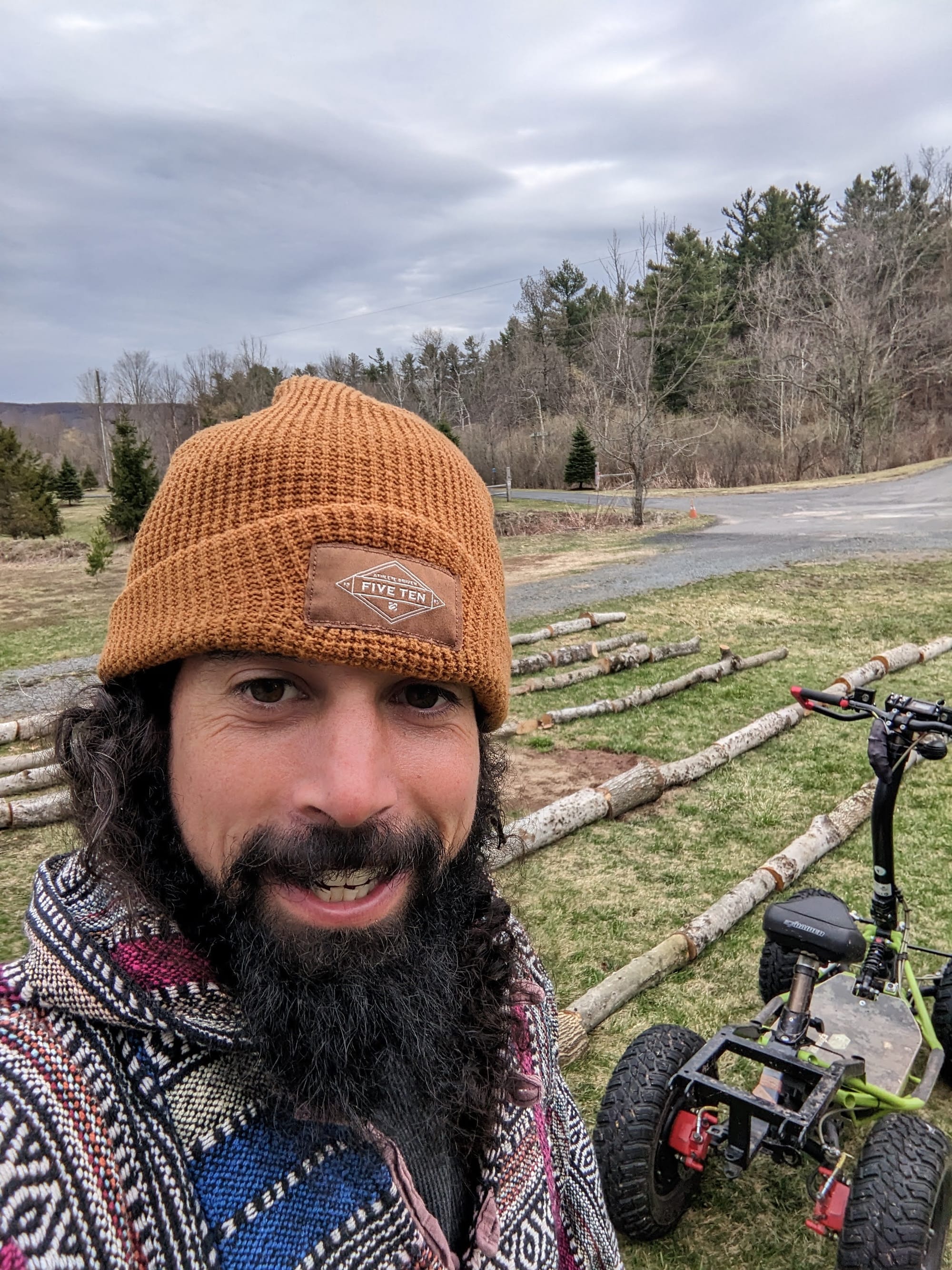
For a long time, I have been imagining that there must be a better way of doing business. That "business as usual" is broken — and while that is obvious to many people, there is no good convention yet to replace it. Agriculture has one: permaculture, a living, principled framework that practitioners around the world can adopt, adapt, and improve together. Business, entrepreneurship, and investing have nothing equivalent — and that absence is much of what Integrative Organizing exists to address.
I started researching this work because I sensed early on that something fundamental was missing from conventional models of investing and economic value creation. I had been deeply interested in finance from a young age, yet over time it became harder and harder to reconcile what I was taught in business school — the common knowledge of how value is supposedly created — with what I could actually see. There was a disconnect between what was considered profitable and what actually sustained life. Practices tied to war, extraction, and ecological degradation were normalized within financial markets, while regenerative and life-supporting systems were often undervalued or inaccessible.
This tension led me to explore alternative frameworks. I became drawn to self-management and organizational design — and particularly to the question of how to build cultures that embrace power-with dynamics while still celebrating strong leadership, rather than treating distributed authority and personal courage as opposites. Eventually I encountered permaculture, where I found principles that felt inherently aligned with how value should be created — through regeneration, interdependence, and long-term thinking. Permaculture revealed that many of the solutions I had been searching for externally already existed within natural systems, offering not only ecological benefits but also strong economic potential when properly understood.
As I began applying these principles in real-world contexts — stewarding land, participating in regenerative projects, and living closer to gift-based and community-oriented economies — I experienced both the possibilities and the limitations. While natural systems could generate abundance, access to land, infrastructure, and scale often required navigating financial systems that were not designed to support this kind of value creation.
This brought clarity: the issue was not a lack of viable solutions, but a lack of integration. Integrative Organizing emerged as a response to that gap — a way to bring together natural capital stewardship, economic systems, organizational design, and human consciousness into a unified framework. My research is driven by the conviction that if these domains can be aligned, humanity can create systems that are not only more just and regenerative, but also more resilient, scalable, and ultimately capable of supporting a peaceful civilization.
Beneath all of it is a thread I have followed for years — the nondual relationship between self-awareness and self-organization. How a system organizes externally is intimately related to how it is organized internally, and healthy systems at every scale share a common signature.
What can anyone actually do, at the scale of the space you inhabit, to participate in the social, economic, and technological shifts that a peaceful civilization requires?
The research is an act of — and an invitation to — deep valuegenic thinking.
The Book
Integrative Organizing: Creating Multi-Generational Wealth with Principled Natural Capital Stewardship is the forthcoming book and article series emerging from this research. Its structure is still being shaped in dialogue with practitioners — but its purpose is fixed: to serve as a living practical guide for translating the principles of stewardship into actionable practice at the scale of a person, a household, a piece of land, or a community.
At the heart of the book is a single, embodied inquiry — the central question of valuegenic thinking:
What choice can I make, and action can I take, in this moment, to create the greatest net value?
Every line of investigation in the book traces back to that question — and to the proposition that civilization will be peaceful in proportion to how seriously we are able to ask it, individually and collectively.
The work investigates two parallel shifts that peaceful civilization requires — and treats them as a single project, observed from inside and outside:
- Shifts in consciousness — the inner development that allows individuals and groups to organize without coercion, domination, or extraction.
- Shifts in technical systems — the outer infrastructure (ecological, financial, technological) that allows abundance to be distributed rather than scarcity to be concentrated.
The research is focused through three pillars whose integration is, to my knowledge, missing from the existing literature:
- Permaculture design — the principled methodology for organizing living systems for resilience, regeneration, and yield without extraction.
- Open source innovation — the practice of building knowledge, hardware, software, and financial infrastructure as a shared, evolving commons.
- Profit with purpose — the alignment of capital and enterprise with the long-term flourishing of people, place, and the living world.
Bill Mollison's Permaculture: A Designers' Manual established important economic underpinnings for alternative financial models. But to my knowledge, no body of research yet applies permaculture design principles to open source innovation — to hardware, software, and financial systems — as a coherent practice. Closing that gap is a core focus of the book.
These three pillars are not parallel. They are triune: each reinforces the others, and together they make it possible to iterate on a peaceful civilization.
Because peaceful civilization is not a static object — not an ideal society we arrive at and preserve. It is a living system, something to be designed, observed, refined, and re-designed across generations. The book is, at its root, a manual for that iteration.
Contribute to the Research
This is open research, built in public, and grown through collaboration with practitioners doing the work.
If this research aligns with your expertise — and you want to contribute — schedule a Synergy Exploration Call. These are direct, generative conversations to find where our work can strengthen each other's.